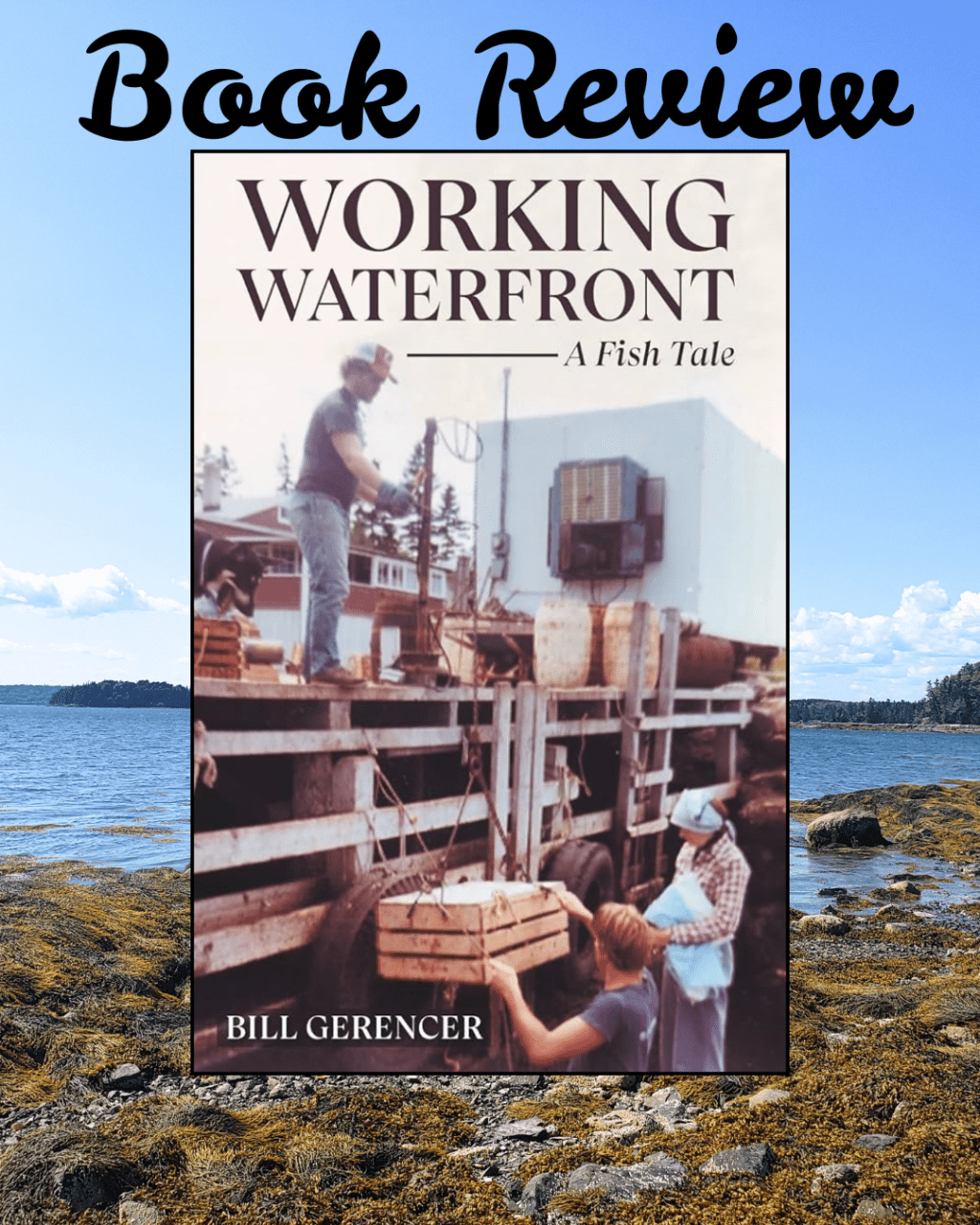
I had the pleasure of meeting Bill at the 2025 Bangor Authors’ Book Fair and Literary Festival. We weren’t able to chat for too long so I wasn’t entirely certain what to expect when diving into Working Waterfront: A Fish Tale. Memoir’s in particular have always been a favorite way for me to learn about the world and others in a more direct way than a simple history-book (and far more exciting too!) So this title piqued my curiosity from the start.
In short, Working Waterfront is a memoir-style book about a career shaped by fisheries and a passion for sustainable and high-quality seafood. I was pleasantly surprised by the candid nature of the writing.
Before reviewing this, I feel like a little of my own background should be included. I grew up in Maine on the coast. I have been involved in working for a lobster hatchery (research based/public education) and the NPS (public education). Currently my partner has worked for a locally-owned mussel farm for several years. Before picking up this book, I had what I would consider a solid knowledge of Maine fisheries but my hands-on experience is limited to the public outreach and education side of things for fisheries/coastal ecosystems. It’s always fun to pick up a local Maine book and find references to places I’ve been or are familiar with.
This book is written in a way that makes you feel like you sat down and started chatting with the author. If anyone has ever spoken at length with some of the Maine lobsterfolks, you’ll understand what I’m getting at. Sometimes the stories drift. Sometimes they go into far more detail than you will ever need. But the passion shines through. Personally, I love the side-exploits and drifting storyline that eventually comes back to the point. It was an interesting view into what has led us to this point in the Maine/New England fisheries status.
There is a lot of description of how various fishing vessels and equipment works. I had a little bit of an edge as I knew of some types of boat setups and was able to ask my partner clarifying questions if needed. The author doesn’t make light of the harshness of working on the ocean. Many times I was nodding along with the statements and descriptions as I had heard similar from my own partner and acquaintances. We also in the later portion of the book get a better understanding of the complexities of navigating fishery policies (as anyone whose been around the Maine coast will know, things don’t stay at the meeting table).
Overall, I enjoyed this read and would recommend it to anyone who wants a perspective on fisheries from the boat, the plant, and the policy room. It’s a unique 3 prong view of how our fisheries have changed and what may be in store for the future. However, some folks may be turned off by the weaving storyline, especially if you’ve never experienced the storytelling capabilities of a Mainer when you ask them for directions.
A solid 4 star read for me!

 Morrigan Gaines - Chaotic Fantasy Author
Leave a comment